

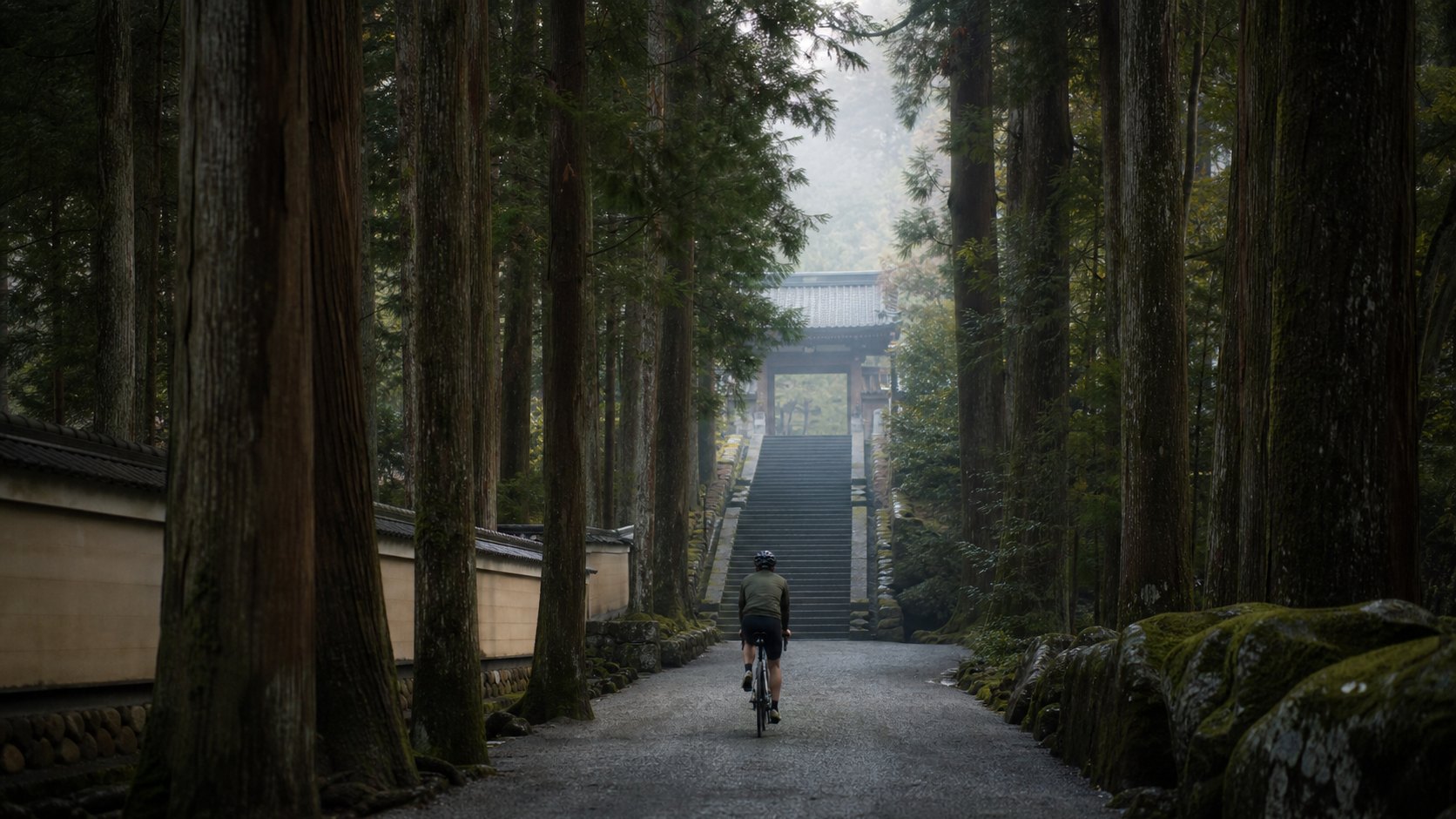
JIMOTT · Philosophy
The JIMOTT Way
Why bicycles. Why Japan. Why the body remembers what the mind forgets.
01 — The Philosophy
The space between, and the state restored.
Two words hold the whole day together. Ma — the space between the notes, not the notes themselves. Totonou — the state of a body put back in order. JIMOTT is built to produce both.
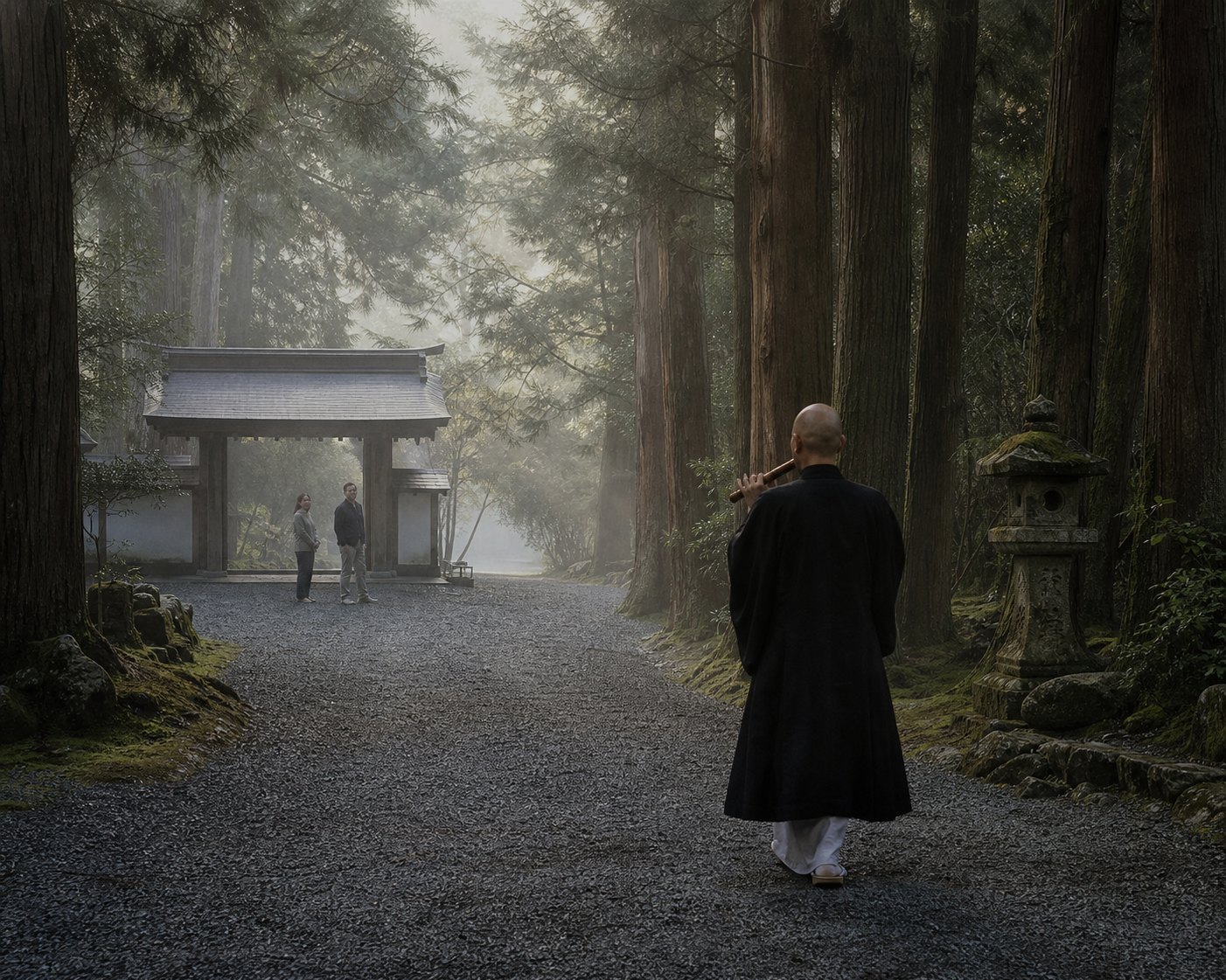
Zen is often pictured as stillness: a monk seated, motionless, breath slowing toward nothing. But the tradition holds a second practice. Suizen — the moving zen once kept by wandering monks who walked the roads of Japan playing the shakuhachi. The walking was the sitting. Motion was the discipline.
A bicycle asks the same question of the body that a cushion asks of the mind. Forty-five kilometres of riverside road empties the head the way an hour of zazen empties it — not through effort, but through a rhythm held long enough to stop noticing it. The pedal stroke becomes the breath.
This is the logic behind every JIMOTT day. We are not moving you from one place to another. We are giving the body enough distance to arrive somewhere quieter than where it started.
02 — The Convoy
Never far from help.
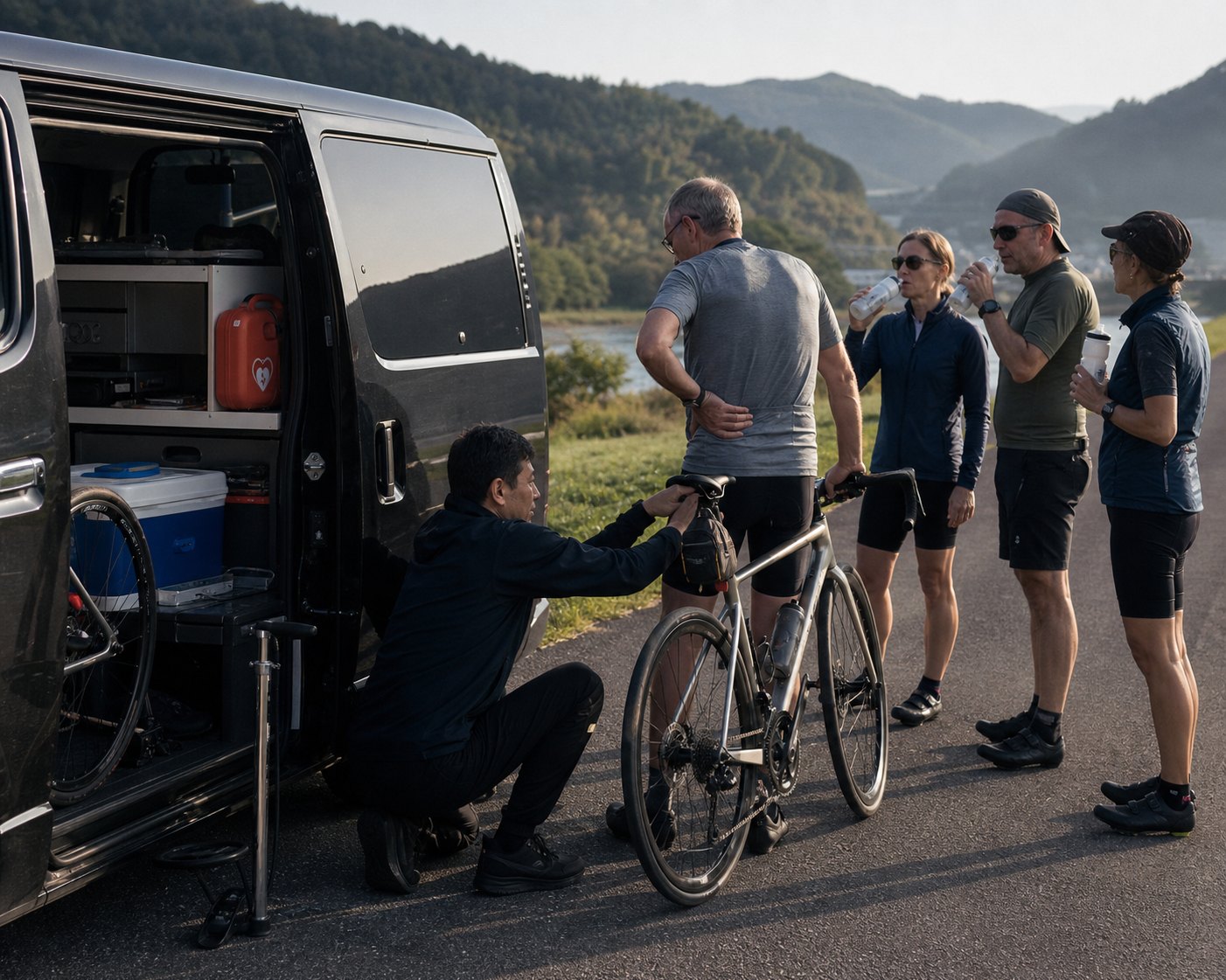
A private group of up to eight guests is never left to itself. The convoy travels with you, staying out of sight until it's needed.
Support Vehicle
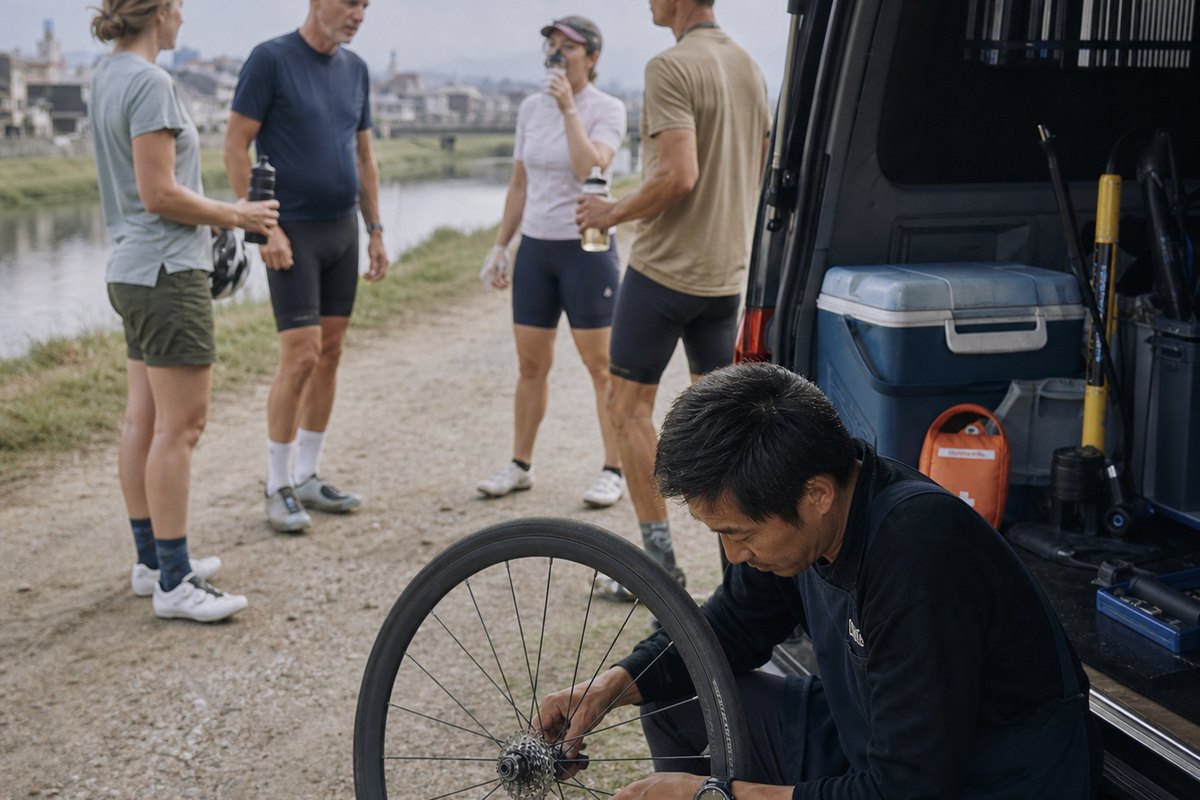
A van follows every ride, out of sight until called. Water, spare wheels, and a place to rest are always one phone call away.
Mechanic On Call
A trained mechanic travels with the convoy. A dropped chain or a flat tire costs minutes, not the day.
AED & First Aid
Every convoy carries an automated defibrillator and a guide trained in its use. Kyoto's hospitals are never more than a phone call away.
Luggage Transfer
Bags travel by van, not by back. What you need for the onsen and dinner is already waiting when you arrive.
The kit
What travels with you.
03 — The Record
The day, kept.
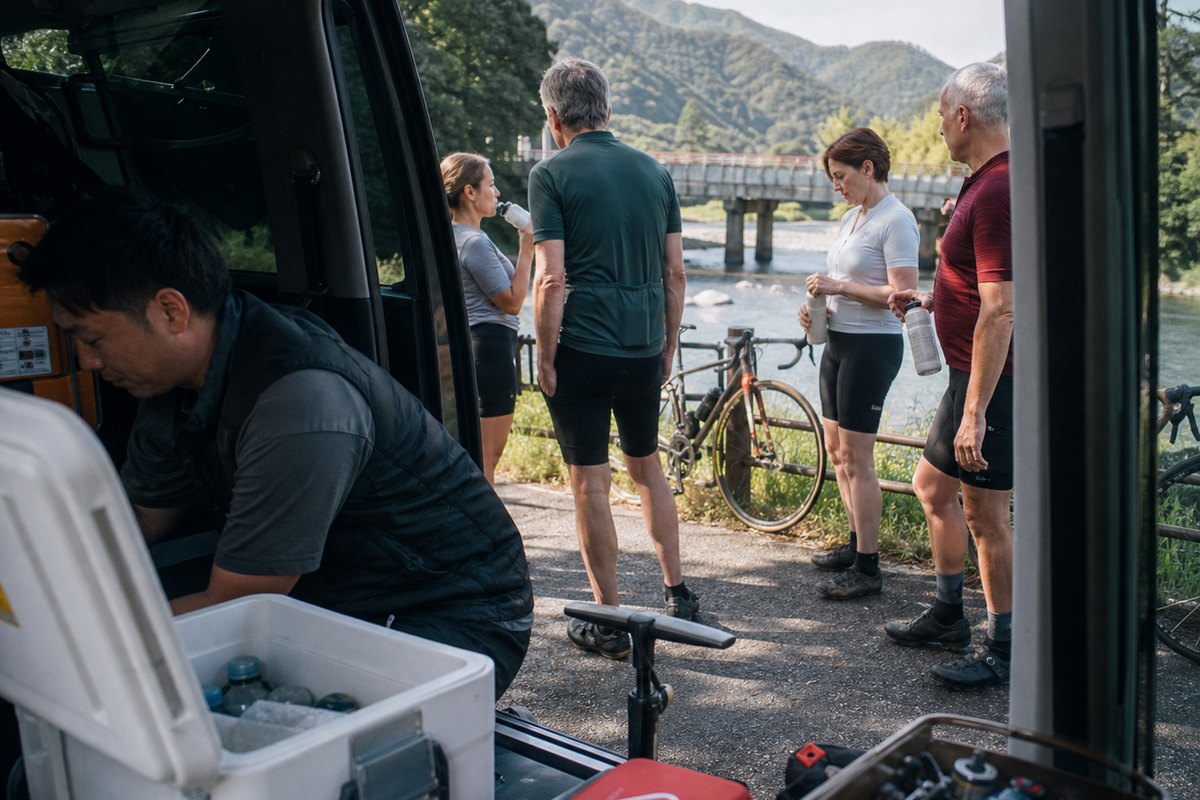
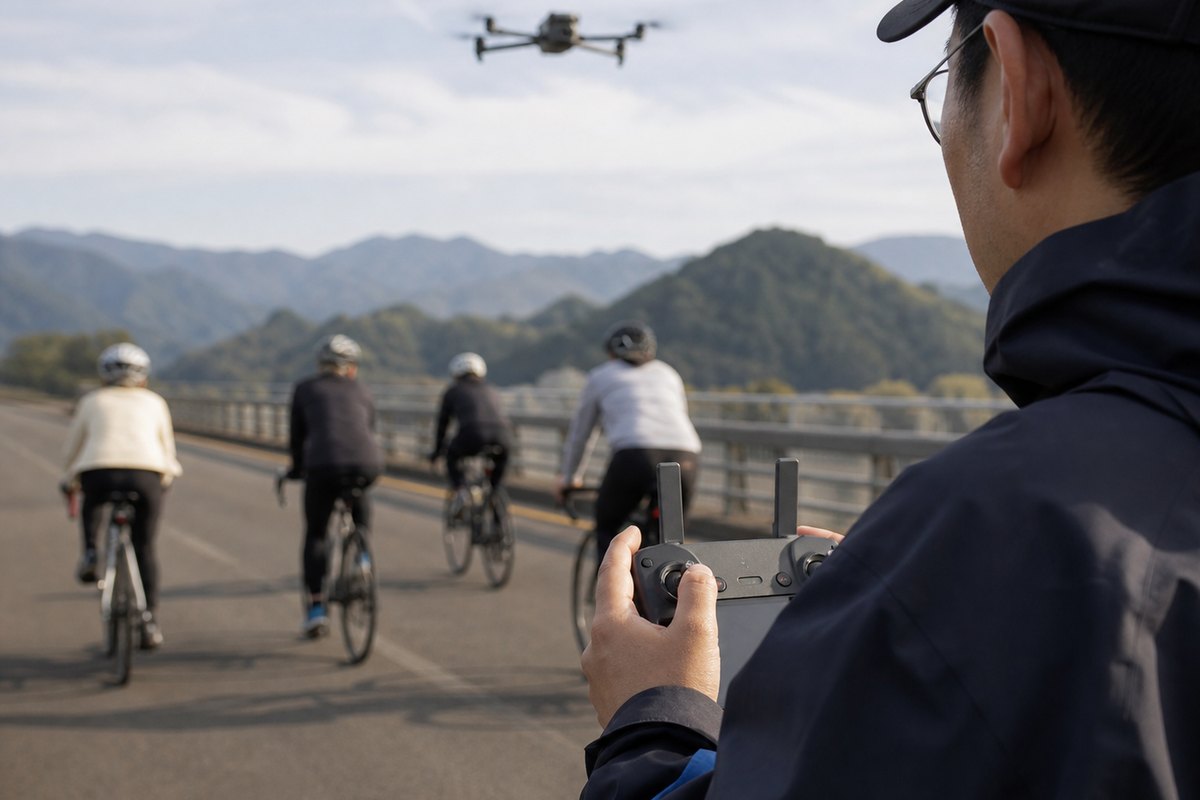
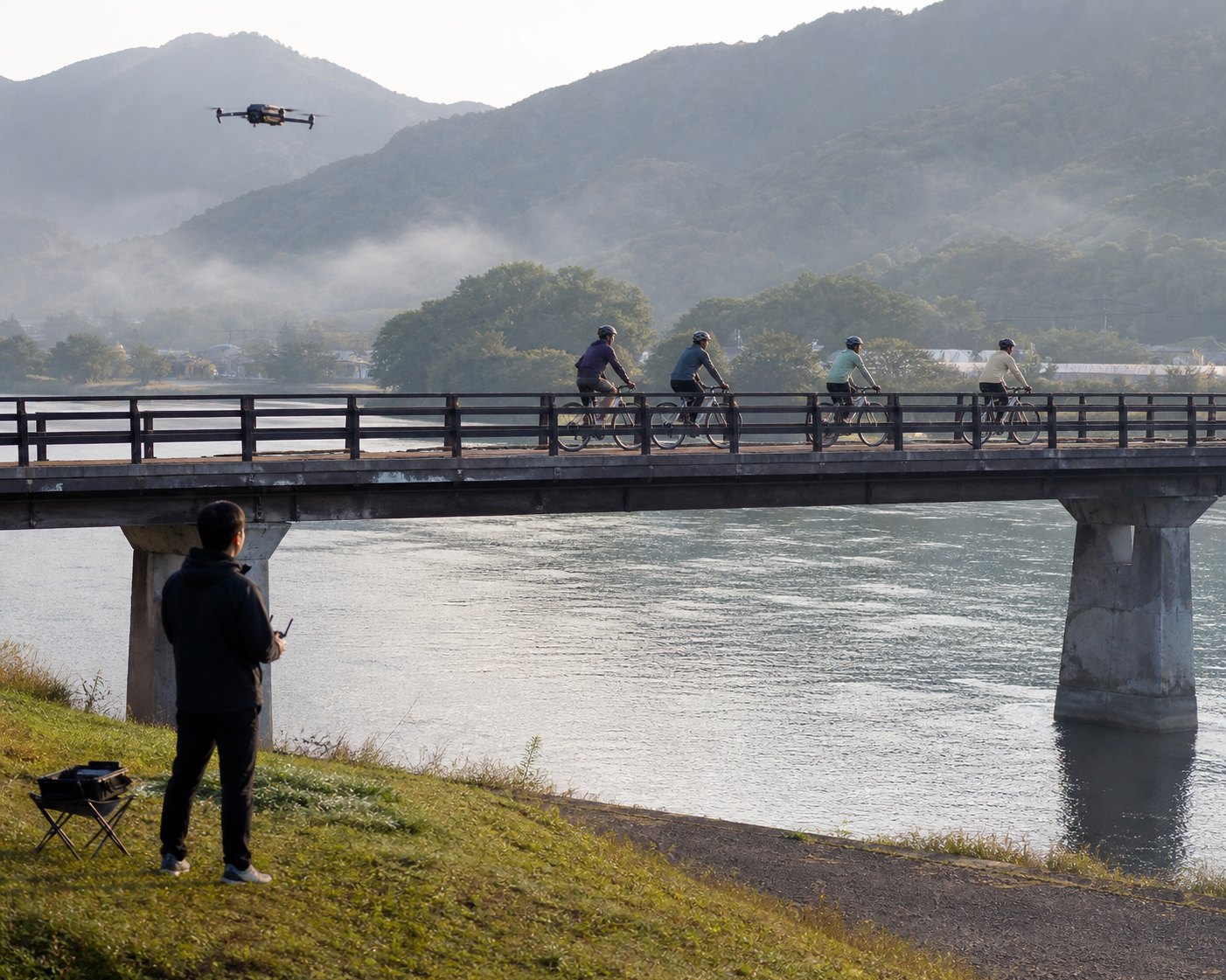
A professional photographer rides inside the group, not ahead of it. A licensed drone team works the wider shots — the river, the rooftops, the whole line of riders crossing a bridge.
By the time dinner is served, a first set of photographs is already in your hands. Within a few weeks, a short cinematic film of the day follows by email, cut to the sound of the ride itself.
04 — The Table
Eating the land's story.
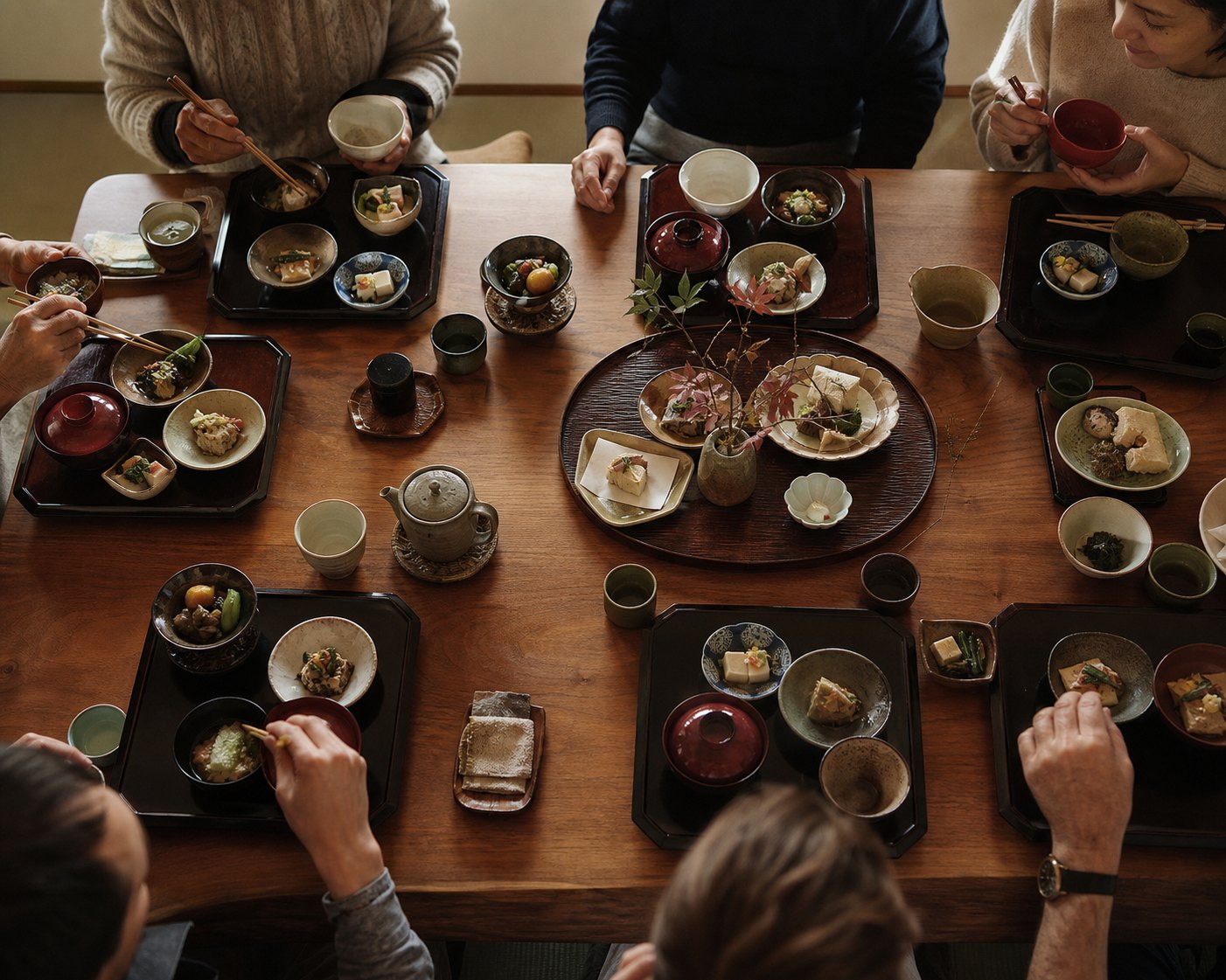
Lunch might be a Kyoto kitchen four generations deep, still cooking for regulars who never see a menu. Or a bowl of Miwa somen, a noodle made in the same valley for twelve hundred years.
On quieter days, it is shojin ryori — temple cooking built without meat, a monk's discipline turned into a meal. The route is planned around the table. Not the other way around.
05 — Activity Levels
Three levels, stated plainly.
Every quick-fact bar on a journey page links back here. The scale is honest, not aspirational.
Level 1
Gentle
Flat, under 30km at an easy pace. Anyone who can ride a bicycle can join.
Level 2
Full-Day Riverside
Full-day riverside riding to 45km. E-bikes are available for every guest.
Level 3
Heritage Roads
Rolling terrain or unpaved heritage roads. E-bike recommended.
06 — Guides & Languages
English throughout. Never a crowd.
Every guide leads in English, trained equally in cycling safety and local history — the story behind a shrine gate matters as much as the line through a corner. Groups stay private and small, never combined with strangers, never larger than eight.
山川異域 風月同天
"Different lands, same wind, same moon."
Begin
Begin your journey.
Tell us your dates and your appetite. We reply within 24 hours.
Check dates